Request support on coordination, information management, integration for nutrition outcomes or technical nutrition in emergencies assistance.
التماس الدعم لتنسيق التغذية وإدارة المعلومات والتغذية في حالات الطوارئ
Demander un appui pour la coordination de la nutrition, la gestion de l'information et la nutrition dans les situations d'urgence
Buscar apoyo para la coordinación de la nutrición, la gestión de la información y la nutrición en situaciones de emergencia
Solicite apoio para coordenação em nutrição, gestão de informação e nutrição em emergências

State of Palestine
L3Coordination mechanism: Cluster-
Year of activation: 2023
National NCC: UNICEF P4 FT in Jerusalem
National IMO: UNICEF NOC TA in Jerusalem
Subnational NCC: UNICEF P3 TA in Gaza
Coordination arrangement: National Cluster at Jerusalem, with sub-national cluster in Gaza.
2025 Annual Report
January to December 2025
The nutrition response faces challenges related to the entry, storage, and distribution of essential nutrition commodities, including therapeutic foods and preventive supplements. Disruptions to in-kind pipelines, combined with fluctuating market functionality and price volatility, complicate the consistent implementation of Blanket Supplementary Feeding and cash-based prevention modalities. These constraints require frequent modality adjustments and place additional pressure on coordination and pipeline planning.
Movement restrictions continue to severely limit humanitarian access across Gaza and parts of the West Bank. These constraints disrupt service delivery, delay supplies, and impede partners’ ability to sustain nutrition screening, treatment, and preventive services. Repeated displacement further complicates continuity of care, follow-up of malnourished children and pregnant and breastfeeding women, and the functionality of fixed and mobile nutrition sites.
The ongoing deregistration of international NGOs poses a serious risk to the nutrition response, as the potential suspension or closure of key partners threatens continuity of malnutrition screening, treatment, and prevention services. The 11 INGOs at risk of deregistration support over 25% of nutrition services and their withdrawal would create immediate geographic and service gaps, disrupt referral pathways for children with acute malnutrition and weaken data flows for early warning and planning.
The nutrition situation in the West Bank continues to deteriorate amid escalating movement restrictions, insecurity, and violence, which are undermining livelihoods, access to food, health, and WASH services, and increasing the risk of malnutrition among children and pregnant and breastfeeding women. however, despite these growing needs, the West Bank remains under-prioritized in the overall humanitarian response, with limited funding allocated to nutrition interventions, constraining partners’ ability to scale up preventive and treatment services and weakening early action to avert further deterioration.
The Nutrition Cluster strengthened advocacy, intersectoral collaboration, and preparedness across Gaza and the West Bank to mitigate escalating nutrition risks. Advocacy efforts focused on highlighting worsening nutrition needs through the IPC, highlighting the impact of access constraints, displacement, and service disruptions on children and pregnant and breastfeeding women. The Cluster worked with other clusters to promote winterization actions that protect breastfeeding and infant feeding practices, and to strengthen integrated preventive and treatment responses. Continued advocacy also addressed the risks posed by inappropriate breastmilk substitute (BMS) donations, reinforcing compliance with the Code to safeguard nutrition and protection outcomes. Preparedness actions emphasized early warning, market and supply monitoring, and adaptive planning to sustain nutrition services in a highly volatile operating environment.
Key Figures
(thousand)Funding
(million)- Children 6-59 months
- Pregnant and Lactating Women
34
Total Partners
Key Resources
list of important documents
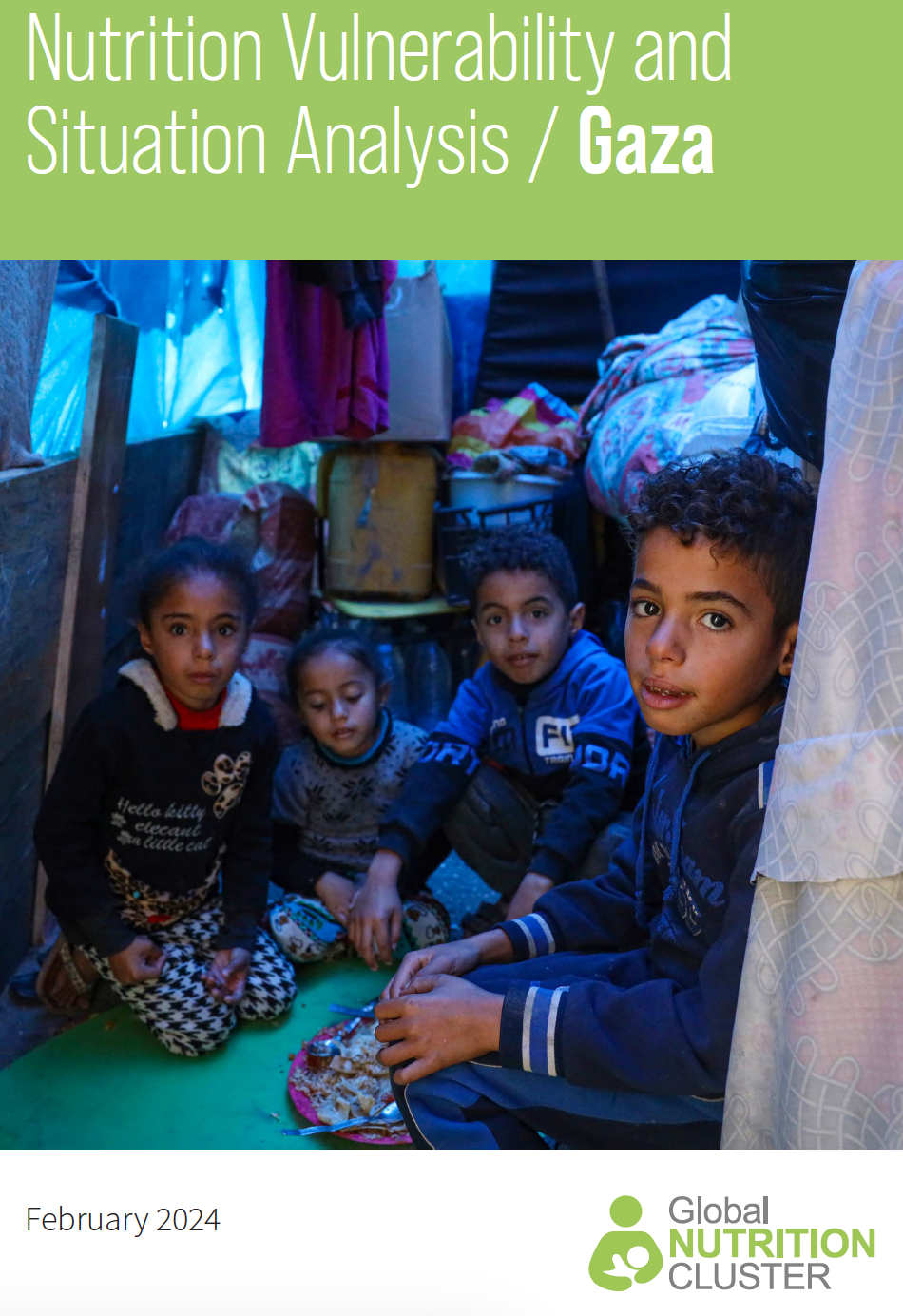
Nutrition Vulnerability and Situation Analysis / Gaza
This Report documents the deteriorating nutrition situation during the first 120 days of the current war. It outlines the findings of a nutrition situation analysis carried out in Gaza between December 2023–January 2024 and fills a crucial gap in nutrition data, where none had previously been avai...

